
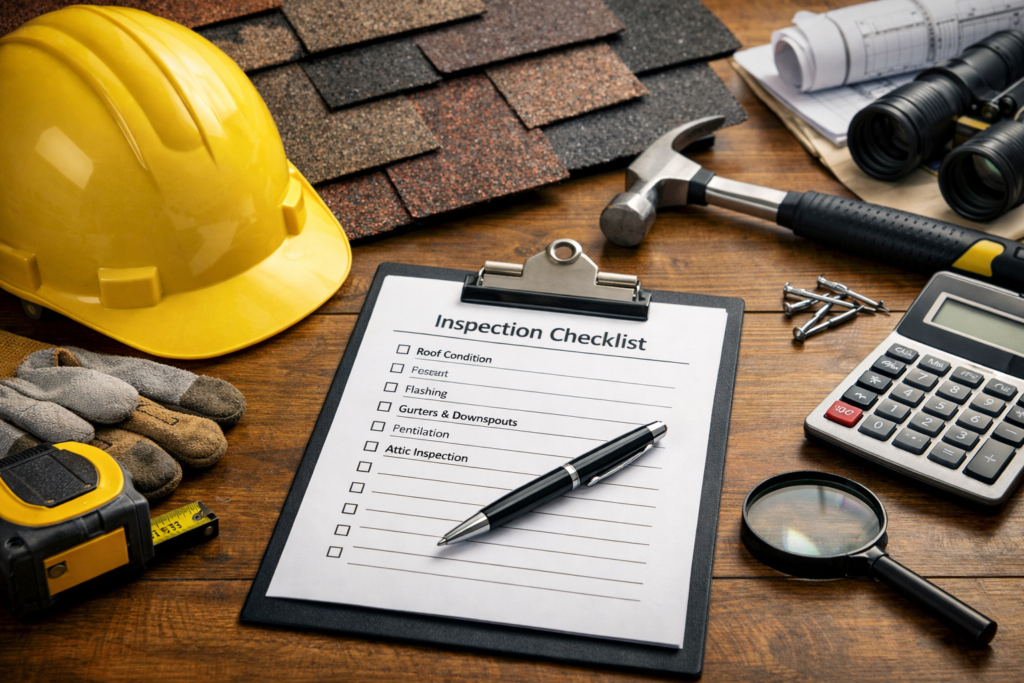

A roofing estimate is only as accurate as the inspection behind it. When a contractor rushes the inspection, the estimate may miss hidden damage, overlook ventilation issues, or ignore flashing and drainage details that later lead to change orders. Homeowners feel the impact through surprise costs, delays, and disagreements about what was included. A strong pre-estimate checklist ensures consistency by evaluating every roof the same way, even when conditions appear straightforward from the ground. It also supports clearer documentation for insurance claims, real estate transactions, and warranty conversations. The goal is not to complicate the visit. The goal is to reduce assumptions by checking the roof system as a whole, including the surface, penetrations, edges, attic conditions, and water flow patterns. When a contractor follows a thorough checklist, the estimate is easier to trust and compare.
What to check before pricing
- Start With Site Safety and Roof Access Details
Before stepping onto the roof, document the basics that affect labor and risk. Note roof height, slope, number of stories, and access points such as driveways, fences, landscaping, and power lines. Confirm ladder placement options and whether safety tie-off points are available. These factors influence crew time and equipment needs, and they should be part of the estimate, not an afterthought. Walk the perimeter and look for ground-level clues, such as granule buildup in gutters, sagging roof planes, stained soffits, and moss growth, that can indicate chronic moisture. Take photos of each elevation and record roof geometry, including valleys, hips, dormers, and any low-slope transitions that require different materials and detailing. Also note where materials can be staged and where debris can be safely hauled away. These early steps prevent onsite surprises that create delays later. They also help the contractor plan how to protect landscaping and manage cleanup. A consistent access and safety review makes the estimate more predictable by tying pricing to actual job conditions rather than relying on averages.
- Surface Condition, Flashing, and Penetration Checklist
Once on the roof, inspect the surface systematically from ridge to eaves and from one plane to the next. Check shingles for curling, cracking, missing tabs, exposed nails, and uneven wear, which may indicate poor ventilation or prior repairs. Look closely at valleys for debris buildup, cut edges, and signs of water channeling under shingles. Evaluate ridge caps and ridge vent integrity, and inspect the seal lines on laminated shingles to see whether tabs are bonded properly. Flashing details deserve as much attention as shingles, because many leaks start at transitions. Inspect step flashing at walls, headwall flashing where roof planes end, chimney flashing and counterflashing, pipe boots, skylight curbs, and any satellite or solar mounts. Check for sealant patches that may be hiding a deeper problem—document rust, lifted edges, and gaps that can let water in during wind-driven rain. Contractors who follow a strict checklist, including teams like Bealing Roofing & Exteriors of Hanover, often catch details such as failing pipe boot collars or improperly layered step flashing that would otherwise require a mid-project change. The estimate should reflect whether these components will be repaired, replaced, or reworked during the roofing scope.
- Drainage, Edges, and Decking Indicators
Water management is the roof’s job, so drainage and edges must be inspected carefully. Check the condition of the gutters, downspouts, and drip edge, including whether drip edge is present on the eaves and rakes, and whether it is properly layered with underlayment. Look for ice dam indicators, such as staining near the eaves, damaged fascia, or interior leaks, that appear during freeze-thaw cycles. Inspect the eave edge for soft decking, especially where gutters overflow or where valley runoff concentrates. Pay attention to roof-to-wall intersections and kickout flashing at roof lines that discharge water near the siding, because missing kickouts can cause hidden rot in the walls. Evaluate the roof deck condition by watching for spongy sections underfoot, uneven planes, and visible sag between rafters. If attic access is available, confirm deck staining, mold-like discoloration, and nail patterns to determine whether the deck has been resheathed before. These details affect whether the estimate should include decking replacement allowances, fascia repairs, or drainage modifications. A checklist that includes edge metal, gutter tie-ins, and deck condition helps a contractor avoid underbidding and helps homeowners understand why certain line items exist.
A Checklist That Prevents Estimate Surprises
A consistent roof inspection checklist reduces estimate surprises by forcing attention on the details that drive real scope and real cost. Safety and access notes set realistic labor expectations, while surface inspection and flashing review catch the most common leak sources before pricing. Drainage and edge checks reveal where water concentrates and where decking and fascia may be compromised. Attic and interior observations link roof symptoms to ventilation, insulation, and moisture patterns that can shorten roof life if left unaddressed. When contractors document these points with photos and clear notes, estimates become easier to compare and less likely to grow mid-project. A thorough checklist protects both the homeowner and the contractor by setting clear expectations and ensuring the final scope matches what the roof actually needs.