
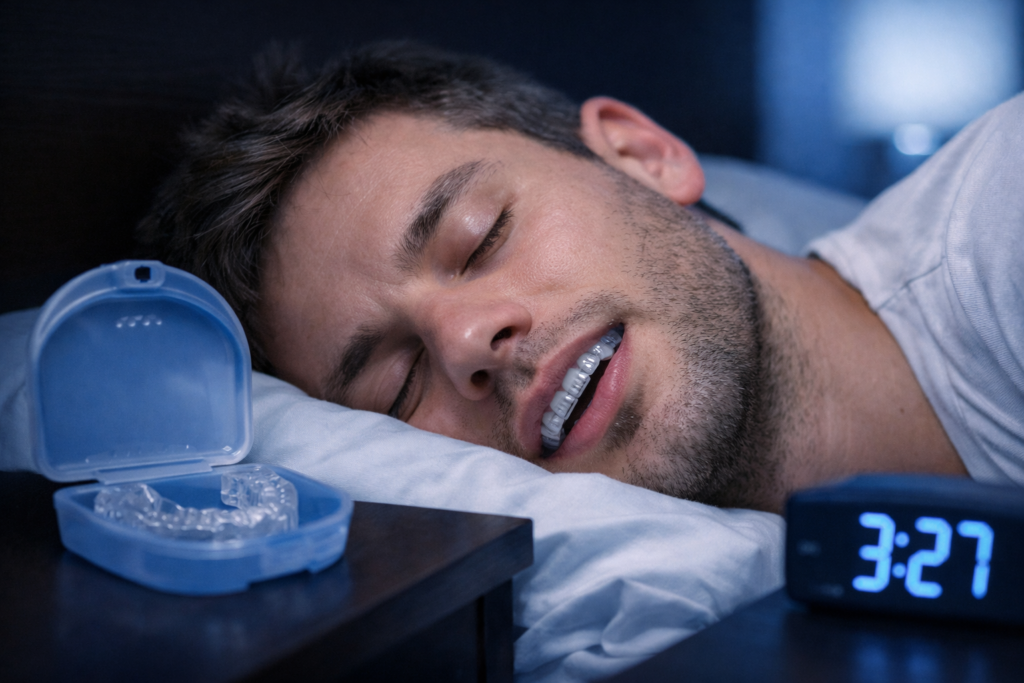

Night grinding, also called bruxism, can occur quietly for months as teeth and jaw muscles endure repeated pressure. Many people only notice it after waking with a sore jaw, a dull headache, or a feeling that their bite is off. Others find out during a dental visit when wear marks appear on the enamel or small chips appear along the edges of the teeth. Because grinding occurs during sleep, detection often relies on patterns rather than a single obvious symptom. The goal of early detection is to reduce ongoing wear, protect restorations, and lower strain on the jaw joints. Custom mouthguards are one common tool, but they work better when they match the type of grinding and the person’s comfort needs. Understanding detection methods and mouthguard choices helps you take action before damage becomes more complicated.
Detection and guard choices
- Early clues that point to nighttime grinding
Night grinding rarely announces itself with one clear sign, so it helps to notice clusters of small changes. Morning jaw tightness, facial muscle fatigue, or tenderness near the temples may indicate that the chewing muscles were active overnight. Some people wake with headaches that fade after an hour or two, especially if the pain sits around the sides of the head rather than deep behind the eyes. Changes in the teeth can also be early signals, such as flattened biting edges, tiny chips, or a sudden increase in food getting stuck between teeth because edges have shifted. Partners may hear clicking, tapping, or scraping sounds at night, although many grinders are silent. Another clue is tongue or cheek irritation from biting during sleep, which can leave scalloped edges on the tongue or sore spots inside the cheeks. If you have recent dental work, grinding can cause repeated sensitivity around crowns or fillings, not necessarily because of decay, but because pressure is transmitted to those structures. Spotting these early patterns matters because it opens the door to simpler prevention and less long-term wear and tear.
- Ways to detect grinding outside the bedroom.
Because sleep is hard to observe directly, detection often uses a mix of self-report, dental evaluation, and occasional monitoring tools. A dentist may spot polished wear facets, enamel thinning, small cracks, or gumline stress patterns that match clenching and grinding forces. They may also look for jaw joint tenderness, limited opening, or muscle knots along the masseter area. Some people try phone audio recordings to capture grinding sounds, which can help if the grinding is noisy, though it will not catch silent clenching. Wear indicators are another approach, using thin stickers or devices that show contact marks after a night of sleep. For people who want more data, some consumer wearables and bite-monitoring devices track jaw muscle activity. They can highlight patterns over time, though results can vary and should be interpreted carefully. If symptoms persist, a clinician may also discuss sleep quality and breathing, as disrupted sleep and airway issues can contribute to clenching. A structured conversation about Dentists Treatment options can connect detection results to practical next steps, rather than leaving you guessing about what matters and what does not.
- Custom mouthguard types and how they differ
Custom mouthguards are designed to reduce tooth-to-tooth contact, spread pressure, and protect enamel and dental work from repeated forces. They are typically made from impressions or digital scans, so they fit the bite closely, which can improve comfort and make the guard easier to wear consistently. Different styles depend on how and where you grind. A full-coverage night guard is common and can be made for the upper or lower teeth based on your bite, gag sensitivity, and any dental restorations. Some guards are softer and more flexible, which can feel comfortable at first, but may not hold up as well for heavy grinders. Hard acrylic guards are more durable and provide stable contact surfaces that reduce uneven pressure, though they may require a short adjustment period. Dual-laminate designs combine a softer inner layer with a firmer outer layer, aiming to balance comfort and durability. There are also options tailored for jaw joint concerns, where the design may influence how the jaw closes, though these should be selected carefully with professional guidance. The right type depends on your grinding intensity, bite pattern, and how you respond to different materials.
Next steps for lasting protection
Night grinding detection works best when you pay attention to patterns like morning jaw tightness, headaches, tooth wear, and cheek or tongue irritation, then confirm those clues with a dental evaluation. Monitoring tools can provide information, but the real value lies in connecting the findings to a plan that protects teeth and reduces strain over time. Custom mouthguards offer several options, including soft, hard acrylic, and dual-layer designs, and the right choice depends on grinding intensity, comfort needs, and bite characteristics. Fit, adjustability, and consistent maintenance strongly influence whether a guard becomes a helpful habit or something that ends up in a drawer. If you suspect grinding, taking action sooner can reduce wear, protect restorations, and improve morning comfort. With the right guard and periodic check-ins, many people can sleep with less strain and keep long-term dental damage from building quietly.