
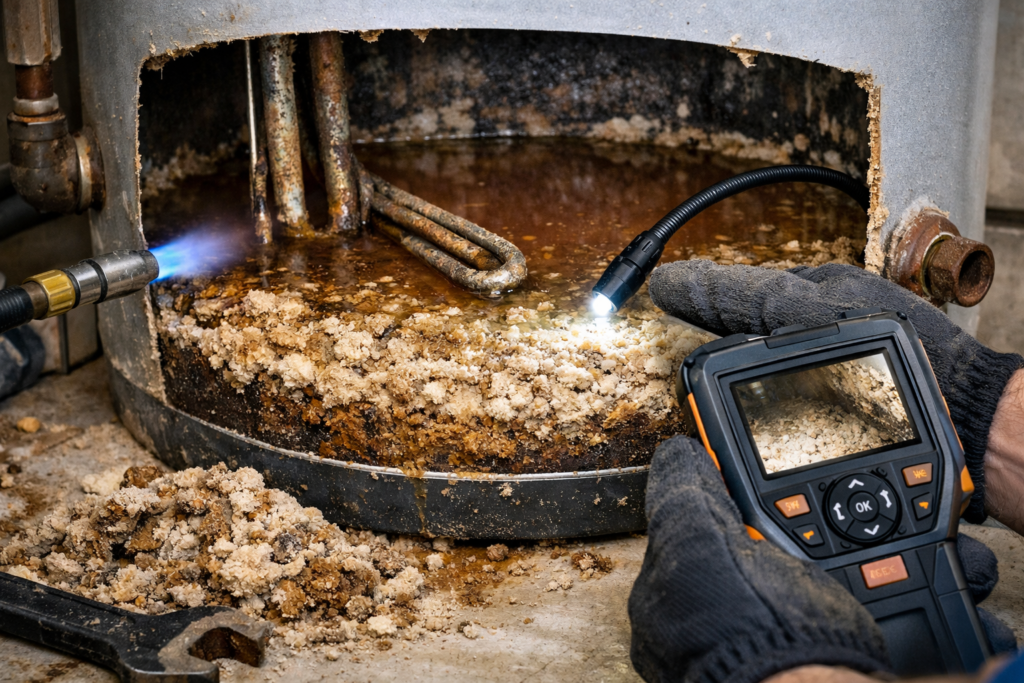

A tank water heater rarely fails all at once. More often, performance slips in ways that feel like minor annoyances: longer recovery time, popping sounds, lukewarm showers, or fluctuating temperatures that seem random. Sediment buildup is a common driver, especially in aging tanks that have heated mineral-rich water for years. As minerals precipitate, they settle to the bottom, creating a layer that acts like insulation between the burner or elements and the water. That forces the heater to work harder, wastes energy, and accelerates wear on internal parts. For property managers and homeowners, diagnosing sediment early can prevent emergency replacements and reduce the risk of tank damage, turning a routine service call into a water event.
What sediment tells you about the heater
- Symptoms That Point to Sediment, Not Just Age
Sediment problems have a distinct fingerprint if you know what to listen for and measure. Rumbling, popping, or crackling sounds during a heat cycle often occur when water trapped under sediment flashes into steam and collapses, creating localized boiling that the tank was never designed to handle. Another clue is inconsistent water temperature, where hot water arrives quickly but runs out sooner than expected because sediment reduces usable volume and slows heat transfer. A heater that seems to short-cycle can also be reacting to overheating near the bottom, where sensors or thermostats read higher temperatures while the bulk water remains cooler. In electric models, sediment can bury lower elements, causing them to overheat and fail prematurely, thereby shifting the load to the upper element and further reducing effective capacity. These symptoms can be mistaken for gas valve issues, thermostat drift, or general aging, so the diagnostic task is separating sediment effects from component failure. At the same time, the unit is still safe to operate.
- Field Checks That Confirm Sediment Accumulation
The practical diagnostic approach combines observation, basic measurements, and a controlled flush attempt. Technicians often start by checking inlet and outlet temperatures, recovery time, and burner or element operation to see whether heat is being produced efficiently. They will also inspect the drain valve performance, because a slow drain with gritty discharge is a strong indicator of sediment. In many cases, the first gallon drained looks cloudy or sandy, then clears, then turns cloudy again as the flow disturbs deeper layers. Another reliable clue is the heater’s behavior during a partial flush. If the flow stops abruptly or sputters with debris, sediment may be blocking the drain port or stacking thickly at the bottom. Some service teams reference resources like https://quality-hc.com/water-heaters-tulsa-ok/ when explaining to owners what a flush can and cannot reveal, because expectations matter. A flush may improve performance, but it can also expose a tank that is already compromised, so diagnostic steps must include safety checks for leaks, rust, and signs of internal corrosion before pushing the unit aggressively.
- Why Sediment Changes Efficiency and Lifespan
Sediment is not just a nuisance; it changes the physics inside the tank. On gas heaters, a heavy sediment layer forces heat to travel through mineral deposits before warming water, raising burner runtime and increasing flue losses. That extra runtime stresses the burner assembly, combustion chamber, and venting system, and it can contribute to overheating of the tank bottom. On electric heaters, sediment around the element creates hot spots that accelerate element burnout and can distort internal components over time. Sediment also contributes to anode rod depletion because mineral content and water chemistry affect corrosion dynamics. Once the anode is spent, corrosion accelerates and can turn a manageable sediment issue into a structural tank failure. In multifamily properties, the operational impact is magnified: more runtime increases energy bills, slower recovery increases tenant complaints, and unexpected failures become more disruptive. Understanding the sediment layer as an efficiency and durability problem reframes maintenance from optional to preventive.
- Diagnostic Decisions That Avoid Unnecessary Damage
A common mistake is assuming every noisy heater needs an aggressive full drain and flush. With older tanks, that can backfire. Sediment can act like a temporary seal over weak spots, and disturbing it may reveal pinhole leaks or accelerate failure. That does not mean never to flush; it means to flush with judgment. A careful diagnostic plan evaluates age, prior maintenance history, visible corrosion, and the condition of the drain valve. If the drain valve is plastic and fragile, forcing it can create a leak that did not exist before. Technicians often start with a partial drain, observe debris load, and assess whether the tank refills cleanly without pressure fluctuations. They may also check for pressure-relief valve seepage, the condition of the expansion tank, and signs of overheating that could indicate broader issues. When sediment is heavy and the unit is old, the more responsible path can be planned replacement rather than a risky flush that provides only short-term relief.
Closing Perspective on Keeping Tanks Predictable
Sediment buildup in aging tank water heaters is one of those problems that rewards early attention. It creates recognizable symptoms, measurable performance losses, and escalating stress on parts that were designed for steady heat transfer, not localized boiling and extended runtimes. Good diagnostics combine sound observation with cautious flushing, while accounting for the reality that older tanks may not tolerate aggressive disturbance. When the sediment story is understood, owners can choose the safer path: targeted maintenance while the tank remains structurally sound, or timely replacement before the unit becomes a property-damaging failure. The goal is predictable hot water, predictable energy use, and fewer surprises.
Read also: How do Static Pressure Mapping Across Multi-Tenant Commercial Buildings?