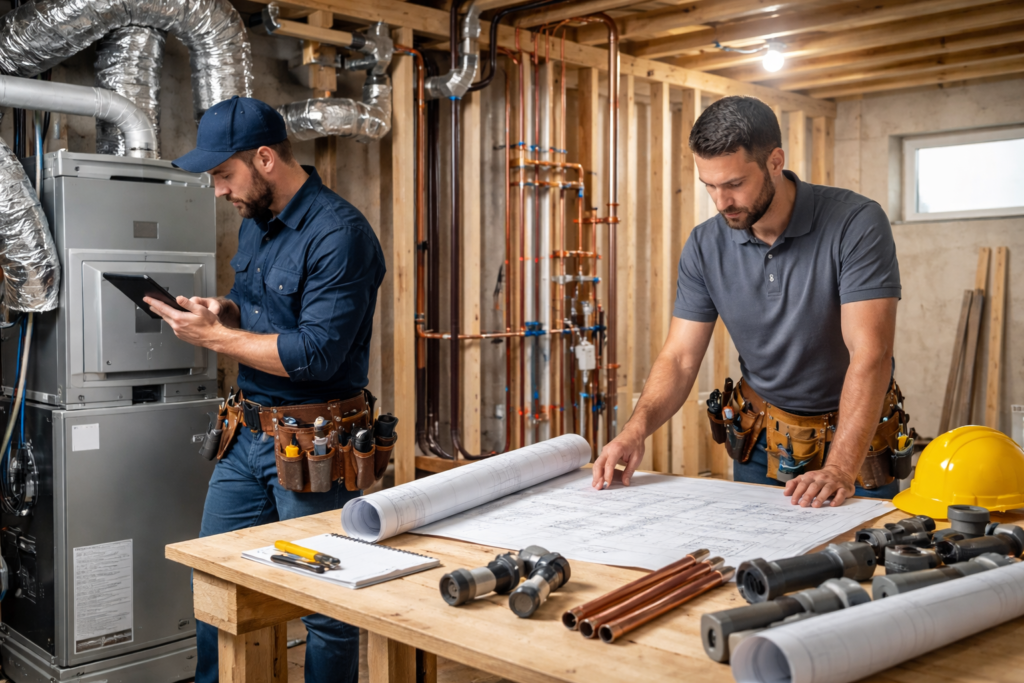

A remodel is one of the few times a home is open enough to improve HVAC and plumbing in a coordinated way, yet many projects still treat them like separate tracks. That separation can cause schedule slips, rework, and crowded mechanical spaces where pipes and ducts compete for the same routes. When you plan both systems together, you can reduce drywall cuts, avoid moving framing twice, and make sure the finished home delivers comfort and reliable water service without noisy surprises. The goal is not to add complexity, but to establish a clear sequence so that rough-ins occur at the right time, inspections are scheduled correctly, and final trim work is not rushed. Coordination also helps with future service access, because remodels often create new soffits, built-ins, and ceilings that can hide shutoffs, drains, and duct connections. With a practical timeline and a shared plan, HVAC and plumbing upgrades can support the remodel rather than slow it down.
One Timeline, Two Trades
- Start With a Shared Scope and a Single Mechanical Map
Coordination begins before demo, with a scope that explains what is changing and why. A kitchen remodel may require new venting, relocated supply lines, and improved make-up air planning, while a bathroom remodel can affect drain slopes, vent routing, and humidity control needs. Build a simple mechanical map that shows where ducts will run, where refrigerant line sets will travel, where supply and drain lines will be routed, and which walls will contain shutoffs or cleanouts. This is where conflicts are prevented early. For example, a new return duct path might want to occupy the same stud bay as a new plumbing vent stack, or a new shower valve depth might interfere with a planned duct boot. A mechanical map also helps the remodel team decide where to open ceilings, which chases to build, and which framing modifications must be approved. It can also include service clearances, so future access to trap cleanouts, condensate lines, and air handler panels is not blocked by cabinets or tile. If the remodel includes new equipment, confirm electrical needs at this stage, since HVAC and plumbing upgrades often add circuits for condensate pumps, heat pump water heaters, or upgraded air handlers.
- Sequence Rough-In Work to Avoid Rework and Downtime
The rough-in phase is where most remodel timelines are decided. After the demo and initial framing adjustments, the plumbing rough-in usually needs to happen early because drain and vent routing often requires precise slopes and longer, continuous runs. Once those paths are established, HVAC rough-in can be placed to avoid conflicts and to use the same openings efficiently. For example, if a ceiling is open for a new drain line, it may be the right time to add a new supply trunk, an additional return path, or a new exhaust duct for moisture control. When both trades coordinate, they can share chases and avoid cutting extra holes in joists or blocking access to structural members. If the plan includes Air Conditioning Installation in Braintree as part of the remodel, confirm line set routing, condensate discharge points, and equipment pad locations before walls close so the installation does not become a last-minute scramble. It also helps to schedule an internal walkthrough before the inspection, during which both trades confirm that clearances, strapping, and penetrations are sealed and protected. This step can prevent failed inspections and avoid patchwork repairs later.
- Coordinate Controls, Condensate, and Water Heating Details
Some of the most overlooked coordination points are the small connections that link HVAC and plumbing. Condensate management is one of them. Air handlers and high-efficiency equipment produce water that must drain safely, and remodels often relocate equipment or change where drain lines can run. Decide early whether the condensate will gravity drain, be tied into a plumbing drain with the correct air gap, or be pumped. Each choice affects routing, maintenance access, and noise. Water heating is another intersection. If a remodel includes a heat pump water heater, it can affect airflow and temperature in the mechanical area, which can influence duct design, return air paths, and humidity conditions in basements or utility rooms. If the remodel adds new bathrooms or fixtures, the increased hot water demand may justify a change in the piping layout or a recirculation plan, which should be evaluated alongside HVAC load changes from new insulation, windows, or layout modifications. Thermostat placement and ventilation controls matter too. Bathrooms need effective exhaust, and kitchens need proper venting, and these systems interact with HVAC pressure balance. Coordinating controls prevents problems such as drafts, backdrafting, or lingering humidity after showers.
A Remodel Timeline That Stays Predictable
Coordinating HVAC and plumbing upgrades during one remodel timeline is mainly about clarity, sequencing, and preventing trade conflicts before they happen. A shared scope and a simple mechanical map help identify where ducts, pipes, vents, and equipment will compete for space, while still keeping service access in mind. Rough-ins should be sequenced so plumbing drain and vent paths are established early, then HVAC runs are placed to avoid rework and make use of open ceilings and walls. Details such as condensate drainage, ventilation, thermostat placement, and water heating options should be planned together because they affect comfort, moisture control, and long-term maintenance. Inspection milestones and pre-drywall verification steps reduce surprises and keep close-up work from hiding problems that are expensive to fix later. When the remodel team treats HVAC and plumbing as one coordinated system rather than separate checklists, the project stays more predictable, the home performs more consistently, and the finished spaces look clean without last-minute compromises.