
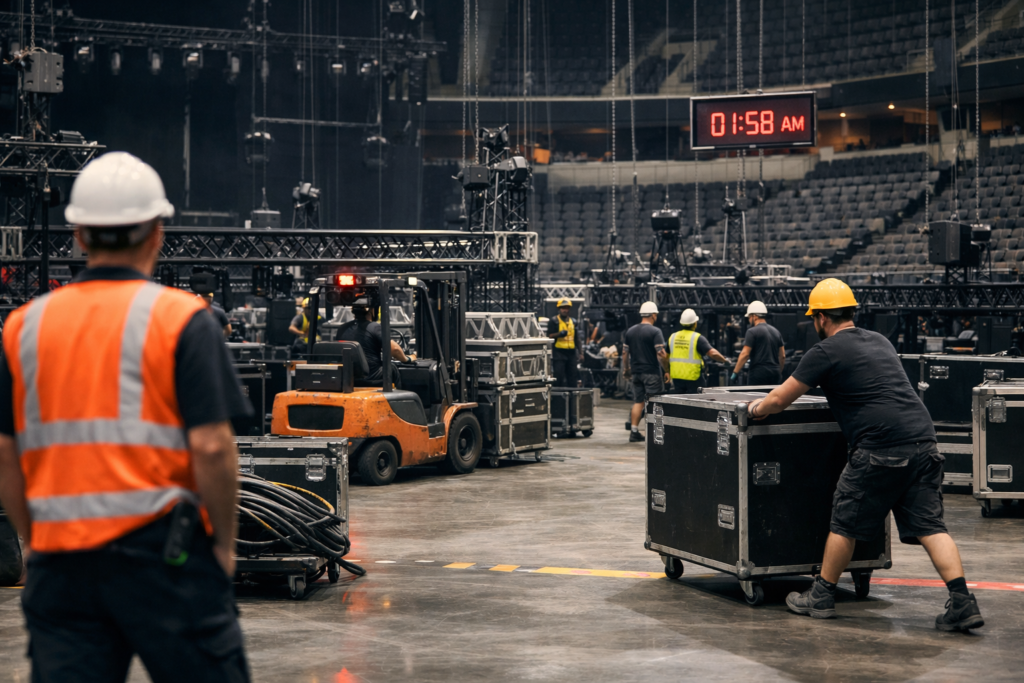

Overtime and venue penalties usually do not come from one big mistake. They come from small delays that stack up: trucks arriving out of order, a dock that gets blocked, missing paperwork, a labor call that starts late, or gear that cannot reach the room because the freight elevator is booked. Load-in and load-out are time-critical operations with many moving parts, and venues often enforce strict dock windows, union rules, noise cutoffs, and restoration standards that trigger fees when schedules slip. The goal is to plan the physical movement of people and equipment as carefully as the show itself. That means building a realistic timeline, assigning responsibilities, controlling access points, and creating a shared plan that every department can follow under pressure. When the process is organized, crews spend time installing rather than searching, waiting, or re-handling cases. The result is less overtime, fewer conflicts with venue staff, and a smoother day for everyone on site.
Faster moves, fewer surprises
- Start With Constraints and Build a Dock-First Schedule
A strong plan begins with venue constraints, because they set the limits you cannot negotiate on show day. Confirm dock location, truck height restrictions, access hours, security check-in requirements, and whether you have a marshaling yard or street staging. Identify freight elevator capacity, dimensions, and reservation rules, as elevator time can become a hidden bottleneck in hotels, ballrooms, and convention centers. Then map the path from the dock to the room, noting door widths, ramps, carpet protection requirements, and any areas that must stay clear for public traffic. Build the schedule around these physical realities, not around idealized setup times. A dock-first schedule also includes labor call windows and break rules, as missed breaks can incur penalties or require forced downtime. Lock in a realistic order of operations, such as rigging first if points must be in before the truss can enter, then power distribution, then staging, then audio and lighting placement, then scenic, then video. The plan should include buffer time for check-in and safety briefings, as skipping those steps often leads to longer delays later. When you know the true choke points, you can schedule around them rather than discovering them after trucks are already queued.
-
Control Truck Flow and Reduce Re-Handling
Many overtime problems start with poor truck sequencing. If the wrong cases arrive first, crews either stack them incorrectly or move them twice, wasting labor hours. Create a truck pack plan that matches the build order, and label cases with both department and priority so loaders and hands can see what is needed first. Use a marshal or dock captain to control when each truck is released to the dock, where it parks, and when it must clear. This is also where communication matters. A short call sheet that lists arrival times, dock contact numbers, and unloading rules reduces confusion. If you are coordinating Event Production in Orlando, the same principle applies across venues with tight access: you win time by keeping the dock orderly and preventing bottlenecks that force crews to wait. Inside the venue, establish a clear staging zone for each department, with tape lines and signage, so cases land where they belong instead of forming one giant pile. Assign a runner or forklift operator if allowed, because a dedicated equipment mover prevents technicians from abandoning installs to push cases. The less gear is touched twice, the lower the overtime risk.
- Plan Labor in Waves, Not One Big Call
A common budget leak is calling too many people too early or too few people during the critical push. Labor should match the work curve. Early load-in may require more hands for unloading and placing cases, fewer during detailed cabling, more again for scenic builds or chair drops, and a focused crew for show call. Use wave scheduling so you don’t pay for idle time. For example, call dock loaders and utility hands first, then audio and lighting techs once truss and power routes are ready, then video once screen structures are in position, then décor once heavy work is done. This approach also reduces safety risks because fewer people are competing for the same space. Build break compliance into the plan and appoint someone to track it, because missed breaks can cause forced stops that disrupt the schedule more than planned pauses. Include a contingency labor list that can be activated if something breaks or if the venue imposes an unexpected restriction. The point is to treat labor like a timed resource, not a fixed block, and to keep work moving continuously without crowding the room.
Turn Logistics Into Predictable Outcomes
Reducing overtime and venue penalties comes from treating load-in and load-out as a logistics project with clear ownership, not a scramble that relies on hustle. Start by building a dock-first schedule that accounts for access hours, freight elevators, and labor rules, then sequence trucks and cases to match the build order and minimize re-handling. Match labor calls to the real work curve with wave scheduling, and assign roles like dock captain and floor lead to keep decisions fast and consistent. Plan it out early, including restoration responsibilities and walkthrough sign-off, so end-of-night fatigue does not turn into fees. When these details are handled upfront, crews spend their time installing and striking efficiently, the venue sees a professional process, and the entire event timeline becomes more predictable, even when unexpected changes appear.