
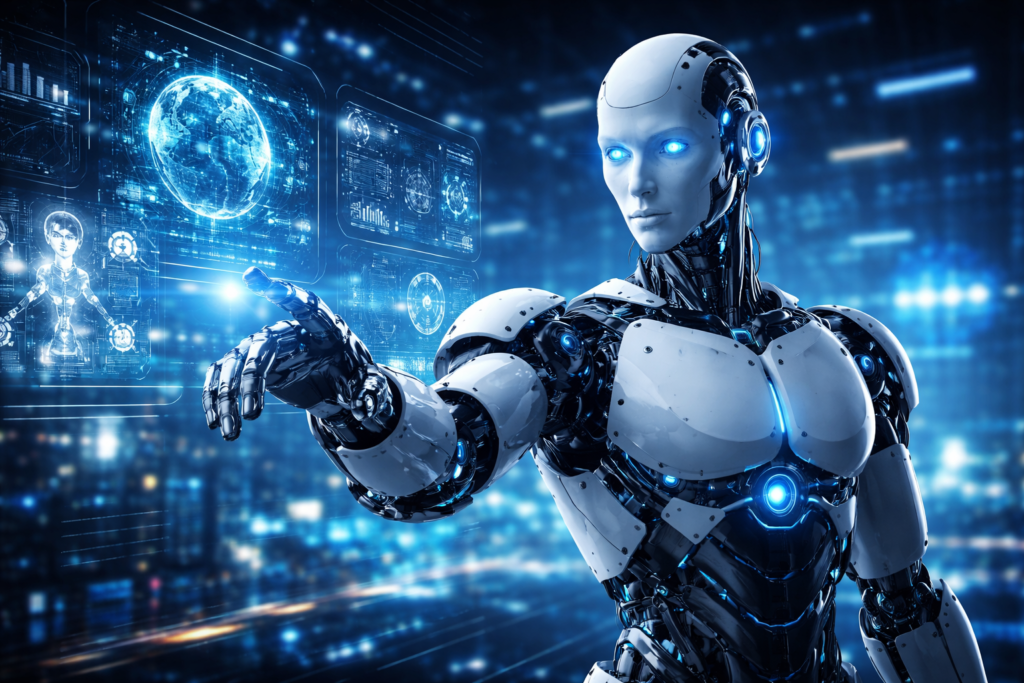

Ponas robotas is a phrase that has gradually evolved from a simple linguistic expression into a broader symbol of technological progress and human curiosity. Originating from the Lithuanian language, where it directly translates to “Mr. Robot,” the term carries both literal and conceptual weight. In today’s interconnected world, it represents far more than a mechanical machine. It reflects the ongoing integration of robotics and artificial intelligence into daily life, industry, healthcare, and even culture. Understanding ponas robotas requires exploring its linguistic roots, technological foundations, social implications, and the transformative role intelligent machines now play in shaping modern civilization.
Linguistic Roots and Cultural Context
The phrase itself combines two Lithuanian words: “ponas,” meaning “Mr.” or a respectful form of address, and “robotas,” meaning “robot.” This respectful framing is significant. It suggests a humanization of technology, implying familiarity and perhaps even partnership rather than distance. Language often shapes perception, and by assigning a respectful title to a machine, society subtly acknowledges its importance and presence in daily life.
Culturally, ponas robotas resonates with broader narratives about technology’s role in human development. For decades, literature and cinema have imagined machines as companions, helpers, or even challengers to human authority. Today, that imaginative vision increasingly overlaps with reality. Robots are no longer confined to fictional stories; they are visible in hospitals, warehouses, classrooms, and private homes. The phrase thus captures a transition from imagination to lived experience.
The Technological Foundations of Ponas Robotas
At the heart of ponas robotas lies a combination of robotics engineering and artificial intelligence. Early robots were limited to repetitive, preprogrammed tasks. They could assemble parts on a production line or perform simple mechanical functions, but they lacked adaptability. Modern systems, however, incorporate machine learning algorithms that enable them to analyze data, recognize patterns, and adjust their behavior accordingly.
Computer vision allows these machines to interpret visual information, identifying objects, reading signs, and navigating complex environments. Natural language processing enables them to understand and respond to spoken or written human communication. Sensor integration allows them to detect temperature, pressure, movement, and other environmental factors. These advancements collectively transform a basic mechanical device into a dynamic system capable of decision-making.
What distinguishes ponas robotas from traditional automation is adaptability. Instead of merely executing commands, advanced robots can learn from previous interactions. For example, a household cleaning robot can map a room, remember obstacle locations, and optimize its cleaning path over time. Industrial robots can adjust their movements in response to slight variations in materials. This adaptability is a defining characteristic of modern robotics.
Industrial and Economic Impact
In manufacturing and logistics, ponas robotas has become indispensable. Factories rely on robotic arms to assemble intricate components with microscopic precision. Warehouses deploy autonomous mobile robots to transport goods efficiently across vast storage facilities. These systems reduce human exposure to hazardous tasks while increasing productivity and consistency.
The economic implications are profound. Automation lowers operational costs and accelerates production cycles, allowing companies to remain competitive in global markets. At the same time, it changes workforce dynamics. While some repetitive jobs are reduced, new opportunities emerge in robotics maintenance, programming, data analysis, and systems design. The shift demands adaptation, education, and reskilling to ensure workers can participate in this evolving landscape.
Small and medium enterprises are also embracing robotics. Affordable collaborative robots, often called cobots, are designed to work alongside humans rather than replace them. These machines assist with lifting heavy materials, performing precision assembly, and managing repetitive processes. The result is a more efficient and safer working environment.
Healthcare Transformation
Healthcare is another domain profoundly influenced by ponas robotas. Robotic surgical systems enhance precision during delicate procedures, enabling minimally invasive operations that reduce patient recovery time. Rehabilitation robots assist individuals recovering from injuries, guiding them through repetitive movements with consistent accuracy.
Hospitals increasingly use autonomous systems for logistical tasks such as delivering medications, transporting lab samples, and disinfecting rooms. By handling routine operations, robots free healthcare professionals to focus on patient care. In elderly care settings, companion robots provide reminders for medication, monitor vital signs, and offer interactive engagement that helps combat loneliness.
These applications demonstrate that robotics is not merely about efficiency; it is about improving quality of life. When designed and implemented responsibly, intelligent machines can extend human capability and compassion.
Domestic Integration and Daily Life
For many individuals, ponas robotas is most visible in the home. Robotic vacuum cleaners glide across floors autonomously. Smart assistants respond to voice commands, manage lighting, adjust thermostats, and play music. Lawn-mowing robots maintain gardens with minimal supervision. These devices may seem modest, yet they collectively represent a significant shift in daily living.
The integration of robotics into household environments illustrates how technology becomes normalized over time. What once seemed futuristic now feels routine. As these systems become more sophisticated, they will likely handle increasingly complex domestic tasks, further reducing manual effort and expanding convenience.
Education also benefits from robotics integration. Interactive learning robots help students grasp programming concepts and logical thinking skills. By engaging children through play and experimentation, they encourage curiosity and technical literacy. This early exposure is crucial for preparing future generations to thrive in a technology-driven world.
Ethical Considerations and Social Responsibility
As ponas robotas systems become more prevalent, ethical considerations gain importance. Data privacy stands at the forefront. Robots equipped with cameras, microphones, and sensors collect vast amounts of information to function effectively. Ensuring this data is stored securely and used transparently is essential to maintaining public trust.
Accountability presents another challenge. When an autonomous system makes a decision that leads to harm, determining responsibility can be complex. Clear regulatory frameworks are necessary to define standards for safety, liability, and oversight. Policymakers, engineers, and ethicists must collaborate to create guidelines that balance innovation with protection.
There is also a broader philosophical question about human identity and purpose. As machines perform tasks once reserved for humans, society must reconsider how work, creativity, and value are defined. Rather than viewing robotics as a threat, many experts advocate for a perspective of collaboration. Intelligent machines can handle repetitive or hazardous tasks, while humans focus on creativity, empathy, and strategic thinking.
Human–Robot Collaboration
The future of ponas robotas lies not in replacement but in partnership. Collaborative robots are designed with sensors and safety mechanisms that allow them to operate alongside humans. In manufacturing environments, a human worker might guide a robot’s actions while the machine performs precise or heavy-duty components of the task. This synergy enhances productivity while preserving human oversight.
In creative fields, robotics and AI tools assist artists, architects, and designers in exploring new forms and possibilities. In agriculture, autonomous systems monitor crops, analyze soil conditions, and optimize irrigation, enabling farmers to make informed decisions. These examples illustrate that robotics can amplify human capacity rather than diminish it.
Remote operations represent another frontier. Robots controlled from afar can perform tasks in dangerous environments such as deep-sea exploration, disaster zones, or space missions. By acting as extensions of human capability, they expand the boundaries of exploration and discovery.
The Path Forward
As technological progress continues, ponas robotas will likely become even more integrated into daily life. Advances in connectivity, such as high-speed networks and edge computing, enable faster communication between machines and control systems. Improved battery technologies and energy efficiency will enhance mobility and endurance. Artificial intelligence algorithms will grow more sophisticated, enabling deeper contextual understanding and autonomous decision-making.
However, progress must be guided by responsibility. Developers must prioritize safety and ethical design. Governments must create adaptive regulatory frameworks. Educational institutions must prepare students for evolving career landscapes. Public dialogue should remain open and informed, ensuring that technological growth aligns with societal values.
Conclusion
Ponas robotas represents more than a linguistic expression; it embodies a transformative era in which intelligent machines collaborate with humans to reshape industries, healthcare, education, and domestic life. From factory floors to living rooms, robotics has moved beyond imagination into tangible reality. The systems driving this transformation combine engineering precision with artificial intelligence, enabling adaptability and interaction that once seemed impossible.
As society navigates the opportunities and challenges of this technological evolution, the emphasis should remain on partnership. By embracing collaboration, prioritizing ethical responsibility, and investing in education and innovation, humanity can ensure that ponas robotas serves as a tool for progress rather than disruption. The future will likely see even deeper integration of robotics into everyday existence, not as distant mechanical entities, but as intelligent systems working alongside people to build a more efficient, safe, and connected world.
Read also: Katy Davis Suffield: Inspiring Excellence in Agriscience Education