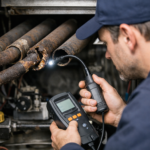

A furnace can run one day and fail to start the next with no dramatic warning. In many buildings, the signs were there earlier, but they were easy to mistake for a thermostat issue, a cold-weather delay, or a one-time startup glitch.
For property managers, facility managers, and building owners, ignition system problems are worth catching early because they can quickly turn into no-heat calls, tenant complaints, and emergency service costs. Furnace ignition failure is not always a sudden event. It often develops through repeated startup hesitation, intermittent lockouts, and combustion irregularities that show up before the system stops heating entirely. The practical advantage comes from noticing those patterns before winter demand makes the problem more disruptive.
Why Ignition Problems Start Inconsistently
- Startup Problems Often Begin Intermittently
Ignition system failure rarely starts as a full shutdown. More often, the furnace begins showing intermittent startup problems that come and go. The unit may call for heat, attempt to start, and then shut down before a full heating cycle begins. Later, it may start normally, which makes the issue easy to dismiss.
That inconsistency is exactly why these problems get missed. Building staff may hear that the heat returned on its own and assume the complaint was minor. In reality, intermittent ignition trouble is one of the more common early signs that a component in the startup sequence is wearing down, drifting out of spec, or reacting poorly under certain conditions. When a furnace starts failing only some of the time, the operating pattern itself becomes a diagnostic clue.
- Delayed Ignition Should Not Be Ignored
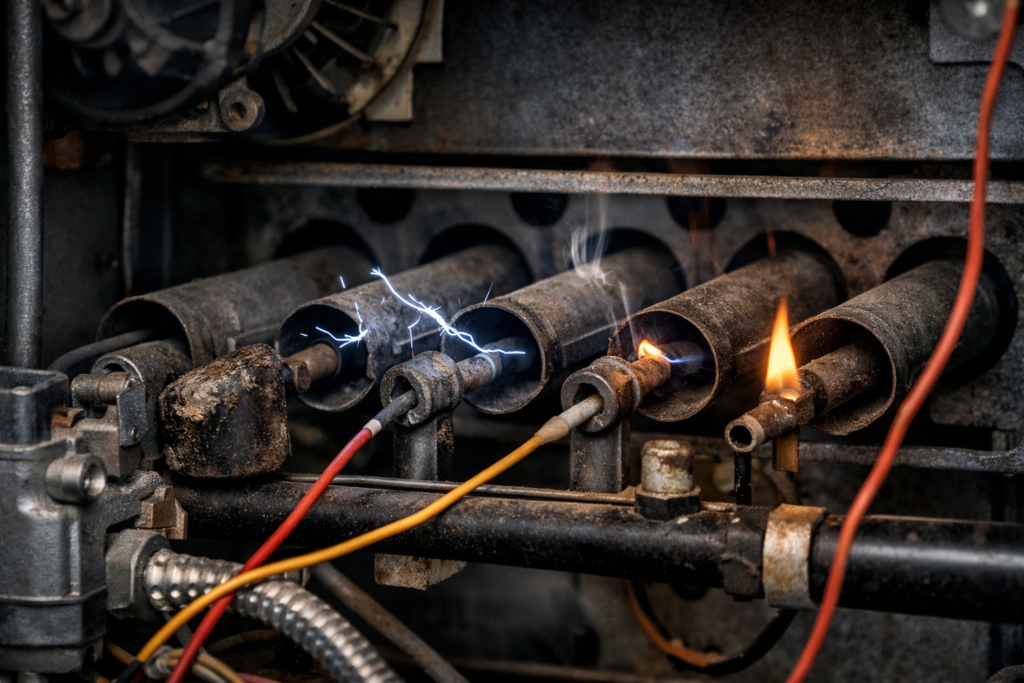
Delayed ignition is another warning sign that deserves immediate attention. Instead of a smooth ignition sequence, the furnace may hesitate before burners light, sometimes followed by a harder-than-normal ignition sound. Even if the system still heats the space, this is not a routine variation that should be normalized.
Service teams and property operators who use providers such as Local HVAC repair services by Solutions Heating & Cooling often treat delayed ignition as a high-priority warning because it indicates startup sequence issues that can worsen quickly. The issue may involve igniter wear, flame carryover problems, burner contamination, gas delivery irregularities, or sensor-related control behavior. The key point for owners is simple: if ignition is no longer consistent or smooth, the furnace is already signaling a fault condition.
- Repeated Reset Or Lockout Events Matter
Modern furnaces are designed to shut down or lock out when the ignition sequence fails repeatedly. This is a protective function, but it also gives a clear early warning when it happens more than once. If a furnace needs to be reset, cycled at the thermostat, or restarted at the disconnect to resume heating, the system is reporting a problem that should be investigated rather than worked around.
Lockout-related complaints often get labeled as random winter issues, especially in properties with multiple units and changing occupancy. That can delay proper diagnosis. Repeated lockouts tied to heat calls usually indicate a recurring fault in ignition, flame sensing, or another startup step that the control board is monitoring. When the same furnace returns to service after a reset and then fails again, the pattern is more important than the temporary recovery.
- Clicking Without Ignition Is A Red Flag
One common early symptom is audible clicking or repeated ignition attempts without normal burner light-off. Property staff may hear the furnace trying to start, but notice that warm air never arrives. In some systems, this happens several times before the unit shuts down for safety.
This sound pattern matters because it often points directly to ignition-stage trouble. The furnace is receiving a heat call and attempting to complete the startup sequence, but something in that sequence is not finishing correctly. It may be an aging igniter, a dirty flame sensor, poor burner grounding, or a gas ignition issue. The exact cause requires testing, but the operational sign is clear: repeated startup attempts without stable ignition should be treated as an early failure indicator, not a temporary nuisance.
- Heating Cycles Become Short And Unreliable
Ignition problems do not always stop the furnace immediately. Sometimes they cause heating cycles to become short, uneven, or unreliable. A unit may start, run briefly, shut off unexpectedly, and then retry later. Occupants may describe this as weak heating or inconsistent room temperatures rather than no heat.
For building managers, this matters because the comfort complaint may sound like an airflow or thermostat issue when the root cause is still in the ignition sequence. If the furnace cannot light reliably or maintain flame verification, the system may fail to complete normal cycles. That creates temperature swings and longer recovery times, especially during colder weather. Short, unstable heating cycles often signal that the ignition system is degrading before total failure.
Early Action Protects Heat Reliability
Furnace ignition system failure usually announces itself before the system stops heating altogether. Delayed ignition, repeated clicking, intermittent startup, lockouts, short cycling, and recurring comfort complaints are all signs that the startup sequence may be breaking down. The furnace may still run at times, but reliability is already slipping.
For property managers and building owners, the practical takeaway is straightforward: treat ignition irregularities as early warnings, not minor annoyances. Fast attention to these signs helps avoid after-hours no-heat calls, reduces downtime, and protects the building from broader comfort and operational disruption. In heating season, dependable startup is not a small detail. It is the foundation of whether the system can deliver heat when the property actually needs it.