

A polished lobby and fresh paint no longer guarantee stable occupancy. Many buildings still lose strong tenants because the workspace itself feels rigid, outdated, or expensive to adapt.
That is the practical shift property managers, facility managers, and building owners are dealing with now. Companies are still leasing offices, but they are choosing spaces that support hybrid schedules, faster team changes, and lower fit-out friction. A tenant may accept a smaller footprint, but they will demand a smarter layout, better shared amenities, and fewer operational headaches. Owners who understand this are not simply renovating for appearance. They are building flexible office environments that lease faster, perform better, and hold tenant interest longer.
- Hybrid Work Changed Leasing Priorities
For years, office leasing decisions were driven by square footage, location, and finish quality. Those still matter, but hybrid work has changed the order of importance. Tenants now ask how easily a space can be reconfigured, whether collaboration zones can be added without major construction, and how the building supports fluctuating daily occupancy.
This matters because many tenants no longer want a fixed layout designed for one team structure over a five- or seven-year term. They want operational flexibility built into the lease decision. Buildings that offer adaptable floor plates, practical shared spaces, and clear upgrade paths are more attractive than spaces that look premium but require heavy tenant spending to become usable.
- Layout Flexibility Reduces Tenant Friction
A flexible office is not just an open floor plan. It is a space that can support quiet work, meetings, client visits, and team collaboration without forcing a full redesign every time the tenant grows or restructures. That starts with planning zones rather than fixed assumptions about how every square foot should be used.
Owners who support this approach often see stronger leasing conversations because they can show how a suite can evolve. A startup may begin with bench seating and one meeting room, then later add private offices or a training area. A regional firm may downsize assigned desks and expand touchdown areas instead. That adaptability reduces move-in friction and makes the building feel like a long-term operational fit.
- Local Identity Still Supports Leasing Decisions
Flexibility does not mean generic design. Tenants still respond to location identity, neighborhood convenience, and a sense of place, especially when they are asking employees to commute in a hybrid model. The office must feel worth the trip. Building owners who understand this often pair flexible planning with design cues and amenity choices that reflect how local companies actually work.
In markets where employers compete for talent, even a well-positioned Fort Collins office can lose momentum if the interior experience feels frozen in a pre-hybrid era. At the same time, nearby properties with adaptable suites and stronger day-to-day usability may lease more quickly despite similar pricing. The point is not trend-driven décor. It is aligning the physical workspace with current tenant expectations in that submarket.
- Shared Amenities Carry More Leasing Weight
Hybrid schedules have increased the value of building-level amenities because tenants are using their leased suites differently. When fewer people are in the office every day, companies become more selective about what they need inside the suite versus what can be shared across the property. Conference rooms, tenant lounges, reservable meeting spaces, podcast rooms, and informal collaboration areas can all influence leasing decisions.
For owners, this creates an opportunity to improve building competitiveness without overburdening each tenant suite with duplicate infrastructure. Shared amenities also support smaller tenants that want a professional environment but cannot justify building out every function privately. When managed well, these spaces improve utilization, support leasing velocity, and increase the perceived value of the property without requiring oversized tenant footprints.
- Infrastructure Matters More Than Finishes
Many office upgrades focus first on visible finishes, but tenants increasingly evaluate what makes the space function reliably. Connectivity, power access, HVAC zoning, lighting control, acoustics, and access systems affect daily productivity far more than decorative elements. A stylish office that performs poorly on video calls or for thermal comfort will quickly generate complaints.
Facility managers play a central role here because they understand the gap between a good tour experience and a workable office environment. Buildings that invest in practical infrastructure upgrades can position themselves more convincingly during lease negotiations. This is especially important in hybrid workplaces, where conference rooms and collaboration zones must support continuous video communication. Operational reliability is now a leasing feature, not just a maintenance objective.
- Furniture Strategy Influences Tenant Retention
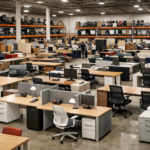
Flexible office design often fails when furniture choices lock tenants into one layout. Owners and managers who provide spec suites or furnished options should think beyond visual consistency and consider modularity, durability, and easy reconfiguration. Movable tables, adaptable workstations, and multipurpose meeting furniture can extend the life of a fit-out and reduce refresh costs between tenants.
This approach also helps with retention. Tenants are more likely to renew when they can evolve the space without major disruption. If every team change requires construction, they may start looking elsewhere before the lease ends. A practical furniture and layout strategy makes the office feel responsive, which supports tenant satisfaction and keeps churn lower in a competitive market.
Flexible Buildings Compete More Effectively
Office demand has not disappeared, but tenant expectations have become more disciplined. Companies are watching occupancy costs closely and choosing spaces that can adapt to uncertain staffing patterns, shifting work styles, and tighter capital budgets. Buildings that still rely on static layouts and finish-driven marketing will continue to lose ground to properties that offer practical flexibility.
For property managers, facility managers, and building owners, the opportunity is clear. Flexible office strategy is not about chasing trends. It is about reducing tenant friction, improving leasing speed, and protecting retention through spaces that work under real operating conditions. Owners who invest in adaptable layouts, reliable infrastructure, and stronger building operations are not just filling suites; they are building for the future. They are building office assets that remain competitive as workplace expectations continue to evolve.
Read also: How do Office Furniture Warehouses Give Startups Room to Grow?